Be yourself; Everyone else is already taken.
— Oscar Wilde.
This is the first post on my new blog. I’m just getting this new blog going, so stay tuned for more. Subscribe below to get notified when I post new updates.
Be yourself; Everyone else is already taken.
— Oscar Wilde.
This is the first post on my new blog. I’m just getting this new blog going, so stay tuned for more. Subscribe below to get notified when I post new updates.
This week’s assignment is to find something that demonstrates the importance of public pressure and getting large tech corporations to change a policy. Therefore I will be looking at the interest group, Greenpeace, and their “Unfriend Coal” campaign. The goals of this campaign were as followed;
“• Increase its use of clean energy to make Facebook coal-free
• Develop a plan to make Facebook coal-free by 2021
• Educate its members about how Facebook powers its services and disclose its carbon footprint,
• Advocate for clean energy at a local, national and international level” (Horne).
This was a successful campaign because it got Facebook to commit to becoming more green. In 2011, they became the first big corporation to commit to being coal-free and use 100% renewable resources (Cook). They have committed to doing this by 2020 (Cook).
Now that it is 2020, I am interested to see if they have completed that goal or if they are close to completing it considering they have kept growing since this initial promise. When doing a google search of this topic, the most recent article is one that is from 2018 and it does not mention what progress Facebook has made towards these goals. It is definitely something that I will be looking forward to hearing about.
Works Cited
Cook, Gary. “BREAKING: Greenpeace Applauds New Facebook Climate & Clean Energy Commitment.” Greenpeace USA, https://www.greenpeace.org/usa/news/breaking-greenpeace-applauds-new-facebook-climate-clean-energy-commitment/. Accessed 22 Apr. 2020.
Horn, Jodie Van. “Greenpeace Calls upon Facebook to Unfriend Coal.” The Guardian, 21 Feb. 2011. http://www.theguardian.com, https://www.theguardian.com/sustainable-business/blog/facebook-unfriend-coal-greenpeace.
This week’s theme was journalists and trust in the media. One of the most predominant messages was that when someone attacks them is that they need to speak up and defend themselves and not wait for someone else to defend them. By waiting for someone else to defend them, then it can make seem less trustable. Most attacks that happen tend to come from the conservative side of politics as we see with U.S. President Trump. However, this is not a new phenomena as these attacks began in the Nixon era (Pingree et al, 2018). Therefore by waiting for someone to speak up and defend them, there is a chance that that person could be from a more liberal political party making the journalist seem biased against conservatives.
Another predominate theme was fact-checking. It is important that journalists ensure what they are saying is factual. One way to do this is by fact-checking. However, that can be a little more difficult with the rise of social media considering information is being spread so much more quickly than it used to be. Meaning that a journalist could report on something that at the time was factual but five minutes after they posted the article new information could come up making it less factual. In a matter of minutes, what was once true is now not. Therefore it is important for journalists to fact-check themselves and to update articles if new information is released.
As for following theUnited Nations At Geneva social media. I have decided to stay with their Facebook for this week. Mainly because they tend to post more up to date information about current events there. One thing they do is share the live streams of the World Health Organization press briefings when they happen. This is one way to ensure that they are keeping people updated with the most relevant information available. They also still release the fact-checks when it comes to misinformation about COVID-19. Making an impact on the lessening the impact of misinformation that is spread about the virus.
Something else I noticed before completing this post. Is about an hour ago they posted something that called out the United States and their response to COVID-19. This is the first time I have seen or heard of them calling out the United States, one of the security council members. To me, this is bold as in past research I note that the United Nations is very unlikely to say or do something directly about the affairs of the United States, especially when it comes to domestic issues. I’ve linked the post here:https://www.facebook.com/UN.Geneva/photos/a.175840892461722/2916916811687436/?type=3&theater. I wonder if Trump will say anything about it since anything negative about his response to anything is a direct insult to him. Maybe they’ll actually trend in the U.S. because of this. Maybe it will have more implications towards the United States and their standing in the international order. I’m hopeful but when looking at this realistically, it most likely won’t have any effect.
Citation for first paragraph below.
Pingree RJ, Watson B, Sui M, Searles K, Kalmoe NP, et al. (2018) Checking facts and fighting back: Why journalists should defend their profession. PLOS ONE 13(12): e0208600. https://doi.org/10.1371/journal.pone.0208600
This week we were instructed to read an article or blog post from Santa Clara University – The Jesuit University In Silicon Valley : Markkula Center for Applied Ethics. The article I chose was “The Ethics of “Giving People a Voice” and Political Advertising on Facebook” by Irina Raicu written on December 5, 2019. I chose this article because I thought it went well with this week’s theme of are the tech companies of Silicon Valley becoming the new gate keepers of information?
I thought this because it touches upon the ethics of using people’s data for advertising and how the platform, Facebook, claims to give everyone a voice. The article talks about how Zuckerberg claims that they are taking steps to fact-check things people are saying however they will not fact-check political advertisements. The author states that this makes Facebook miss an important intersection in which political advertisements can have misinformation as well. I agree this it is a very important intersection that Facebook is missing. Maybe this has to do with how much influence they try to gain in political parties as discussed in our readings this week. Maybe it is a purposeful oversight? However, this article does cite a Business Insider article where Facebook gloats about it’s success with helping political campaigns.
The article also talks about how Facebook’s methods work like a sound dial. Amplifying some voices while choosing to “turn down the volume” on others. It talks about how misinformation shared via Facebook does have actual, bad consequences as studied in Myanmar where there has been widespread disinformation spread on Facebook. Showing that it has actually been really detrimental to minority voices on Facebook.
I thought this article gave a good analysis of the situation as well a good, brief timeline of politics in Facebook. The article is linked here for anyone who may wish to read it themselves: https://www.scu.edu/ethics-spotlight/social-media-and-democracy/the-ethics-of-giving-people-a-voice-and-political-advertising-on-facebook/.
This week I will not be looking at the Instagram of the UN at Geneva. This is due to there being minimal posts about current events that are going on However, I can make a post about their Facebook because their Facebook has made posts about current events.
They tend to post quotes from different world leaders from the UN about the COVID-19 crisis. As well as what a medical crisis like this means for those in less developed countries with less developed health care systems. And what a crisis like this means for refugees, migrants, and stateless people (UN Geneva. https://www.facebook.com/UN.Geneva/posts/2883438441701940. Accessed 2 Apr. 2020.) They also talk about how women’s leadership in response to the COVID crisis is important for different reasons. For example medical data being skewed to favor men and not women (UN Geneva. https://www.facebook.com/pages/category/Public—Government-Service/UN.Geneva/posts/. Accessed 2 Apr. 2020.)
They also share the live briefings from the World Health Organization. I think this is a very good use of their platform because they are using it to share valuable, factual information about the COVID-19 crisis. They also share things like prevention tips and facts about preventing the spread of the disease.
They also use their platform to prevent the spread misinformation. This was an image posted on their Facebook on April 1st. It is a repost of something the World Health Organization posted but they are using their platform to help prevent the spread of misinformation which can be very dangerous during a public health crisis.

UN Geneva. https://www.facebook.com/UN.Geneva/posts/2879550702090714. Accessed 2 Apr. 2020.
I do not think the UN at Geneva will trend during this global crisis. However I do believe that the will use their platform to share accurate and factual information about the spread of COVID-19 from places that may trend, like the World Health Organization.
This week we were meant to find a meme about our topic. I’m sorry but this week my post will be short. This is due to unforeseen circumstances and I am sorry. About an hour ago I found out that my campus was going to close for the rest of the semester and move to online classes. I would rather spend the rest of my time on campus with my friends than doing work. Again, I know that I should not neglect my classwork but as this post is due tomorrow and I have limited time to see the people I care about for another few months, that is more important.
Below is my meme. Although it doesn’t talk about UN functions, I think it’s pretty funny. Below the image is the link to the page (with more UN memes).
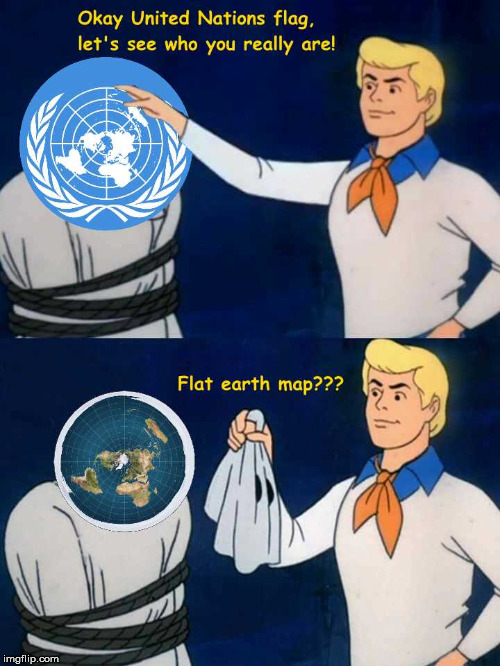
Again, I’m sorry this is such a short post without a weekly update. And I am sorry this is not as good as it could have been but I need to spend the time I have left for this semester with my friends.
These past few weeks have left us in a state of powerlessness. COVID-19 has caused many to work from how, and myself included, many college campuses to close for the rest of the semester and switch to online learning methods. A lot has changed in the past few weeks and it was fast without an end in sight. Coincidentally, powerlessness is the theme of what we have read this week for class.
I would like to start off with a quote from a book called The Power Paradox by Dacher Keltner, “In some ways, how a society does or does not respond to its most powerless people is a direct measure of it’s vulnerability to the power paradox. By attending to the needs of the powerlessness among us, we can use power for the good and contribute to society in enduring ways”(139). I think this a really good quote when it comes to analyzing how our government is handling the COVID-19 situation. This situation has really highlighted the United State’s lack of health care support system for lower-income people. It has also highlighted the emphasis on how our “leader” President Trump thinks about people and the economy. He thinks they are extendable for economic gains. No human life is extendable, let me be perfectly clear on that. But this demonstrates the vulnerability in the American political system that completely ignores those who are not in positions of power. Or most of the population of the United States.
Last post I did not do an analysis of the UN at Geneva’s instagram page. This was due to my own feelings of powerlessness after finding out that I would not be returning to UMF for classes after spring break. When looking at their instagram it seems quite normal until March 14th in which they announce that people have tested positive for COVID-19 at their office and people will begin to work at home (post link here). After that there are few mentions of COVID-19 other than how quiet it is there when it is usually pretty busy. However their twitter and facebook have been quite active in response to COVID-19. They are posting things from The World Health Organization, something that I believe has been trending due to COVID-19. Even tho0ugh COVID-19 is an international problem, I do not think the UN at Geneva will trend simply because they are not a global health organization. However, they are a trusted organization so they will spread information to help combat the COVID-19 crisis.
This week we will not discuss readings for class as much on the blog. However, we will discuss them a little in regards to bots and globalization. This week’s assignments for the blog was to find some, no too extreme, that has the opposite view of who we are following. Now, it was actually kinda hard to find a video about the disadvantages of the United Nations so I am going to share a video by Crash Course that goes over the advantages and disadvantages of globalization. I’m going to share a video on globalization because the United Nations, in my opinion, it is a good example of governmental globalization.
Now this video talks about many different aspects of globalization but I find the best parts that consider governments starts after the 8 minute mark. One part that it talks about I feel connects to the United Nations is how there is still war. Around the 8 minute 45 second mark in the video, John Green, explains how some historians believed that with more economic connectivity and global connectivity we still see large scale ethnic and nationalistic violence in more rural areas around the world. Now the United Nations is a system that was put in place to stop all of this violence. However, we still see it happening. A while back, in my post Connective Parties and What the UN at Geneva Uses Its Instagram For, posted on February 6th 2020, I talk about gender violence and violence on the environment. This video also touches upon how globalization has caused humankind to actually cause more harm to the environment and how we currently have a very unstable model of development that needs to change.
Now, I’m going to make a sharp left turn on what I have been talking about and talk about globalization and social bots. Something that we have discussed before on this blog. In our reading Algorithms, bots, and political communication in the US 2016 election: The challenge of automated political communication for election law and administration by Philip N. Howard, Samuel Woolley, and Ryan Calo in 2018 it states, “[p]olitical bots have been spotted in operation at both the State and Federal level. They have been designed to influence user opinion on single issues like abortion and inoculations, they have been used to pad the follower lists of political leaders, and they have been used to promote the content produced by the major political parties and PACs”(85-86). This states that bot can be used and the federal and state level for U.S. elections so they are talking about the levels of bots that can be used. But, if they can be used at these levels, that means that they could probably be used at the international level as well as they have also been used to influence things such as Brexit as well. So I wonder how the United Nations will react to things such as bots and them being used on the international scale as I have not seen or heard of anything sense.
I have not seen anything too different from the UN at Geneva’s instagram usually postings. Although I am surprised that they have not really talked about the Corona Virus and public health more since there are more reports of the virus spreading. That may just be a World Health Organization thing though. I have not seen the United Nations trend this week. Below is the Crash Course video that is discussed above.
This week’s readings talked a lot about social bots. Many of us, myself included, probably have a negative connotation when we think about bots and the internet. For me the first thing that pops into my mind is the 2016 presidential election and how the Russians used political bots to influence the United States elections. As Jonas Haeg in “The Ethics of Political Bots: Should We Allow Them for Personal Use?” (2017) would call it, this would be malicious political bot (or polibot). Malicious polibots are “devoted to obviously malicious aims such as sharing hate-speech, false information, suppressing certain voices, etc., often with the aim or intention of maliciously steering a certain election”(Haeg 87, 2017).
Haeg talks about three kinds of polibots. There are the malicious bots, the personal bots, and the saintly bots. A personal bot is a bot that is used by a person for their own political influence. These bots can wither be saintly or malicious (Haeg 2017). To bring the discussion to the United Nations at Geneva, I believe they would use saintly polibots. The saintly polibot is a bot that is “devoted merely to sharing important, true and relevant political information, with no allegiance to particular issues or sides”(Haeg 87, 2017). I believe this because the United Nations is meant to be an organization that promotes the well being of all humans and does not favor anyone country over another, therefore eliminating the need for malicious polibots.
This week I did not see the UN at Geneva twitter’s trend. However, with the looming coronavirus as we are seeing it still spread, it could very well trend. Also the 43rd regular session of the Human Rights Council did start on Monday so we will see if there is anything that brings about it to make them trend. For some fun I decided to use the Botometer on the UN at Geneva’s twitter account to see if this program thought the account was run by bots. I am happy to report that there is a 0.4 out of 5 chance that the UN at Geneva’s twitter account is run by a bot. I have linked the website below so that you can have some fun checking to see if your twitter friends and followers are actually bots.
This week instead of analyzing a reading in regards to the social media accounts we are following, I am going to share a video with you all. This video is less than two minutes long and it explains the basic functions of the United Nations as a whole and why it is important.
I feel that this is an important video to share regarding the United Nations because not a lot of people know how this organization works. Although this is a very simplistic and quick explain, it is a good starting point when trying to figure out how the United Nations works.
This past week the United Nations at Geneva instagram has posted things from the importance of radio for national radio day, to the importance of sustainability, and tried to entice people to visit them. My favorite post of the week however is their latest post. This post talks about the importance of the media and how important it is because of how quickly it can spread information (UN Geneva, “Video of Mohamed Doumbia,” Instagram. February 18th, 2020, https://www.instagram.com/p/B8tpfBEJ4iS/).
I did not see them trend this week. However, if the Corona Virus keeps spreading like it currently is, I would not be surprised if they did trend before a cure is found.
This week we will look at chapter 2 of the Power Paradox by Dacher Keltner and the Instagram of the United Nations at Geneva. Chapter 2 of this book talks about how power is earned and not given. There are four key principles when it comes to giving someone power. Those principles are “groups give power to those who advance the greater good, groups construct reputations that determine the capacity to influence, groups reward those who advance the greater good with status and esteem, and groups punish those who undermine the greater good with gossip”(Keltner 44).
Now how does this relate to the posting of the UN at Geneva on Instagram? Well, the UN itself is a force that tries to advance and promote the greater good of others. For example on February 6, 2020 they posted about female genital mutilation on its international awareness day (United Nations at Geneva. Photo of End FGM. Instagram, Photo by the UN Women, 6 Feb. 2020, https://www.instagram.com/p/B8ONNAnpPnz/). And on February 12, 2020 they posted a photo of the UN flag saying that we are all one on this Earth and need to work together to shape our future (United Nations at Geneva. Photo of UN Flag on Flagpole. Instagram, Photo by the UN at Geneva, 12 Feb. 2020, https://www.instagram.com/p/B8dm9cwJlvL/).
The UN at Geneva is a good organization to demonstrate these points with because everything they do is to try and advance the greater good of society thus giving them more power. The UN uses their platform to promote human rights and actions that would benefit the greater good instead of trying to benefit the few.
There is another quote in the reading that goes, “groups give us power when we are enthusiastic, speak up, make bold assertions, and express an interest in others” (Keltner 50). I believe this quote also goes along with the UN at Geneva because they are constantly speaking out for those who can not speak out themselves, they make bold assertions about human rights, and they are enthusiastic about it.
Although I did not see them trend this week on Instagram and my analysis of them trending last week was pretty American centric. There is always a possibility of them trending as we did see some international trends this week.
‘

 Sam's Space